Get Your Guest Room Thanksgiving-Ready in One Weekend
A Friday-to-Sunday plan to clear the clutter, refresh the bed, add soft light and privacy, and cover safety basics, using what you already own.
Here’s the plan: clear the room on Friday night, reset the bed, lighting and privacy on Saturday, and finish with safety checks and a little welcome basket on Sunday. Most of it uses things you already own. By Sunday night, the room that’s been holding the printer, the wrapping paper and the off-season coats will feel like a place someone would actually want to sleep.
If your guest room is also your office or your catch-all storage room, this plan is for you. You don’t need a perfect room. You need a clean bed, a clear path, a good light and a door that feels like theirs.
Before you start: two quick questions
Text whoever’s coming and ask two things. Does anyone have allergies, or trouble with stairs or getting around at night? And is anyone bringing a baby or a toddler?
The answers tell you which parts of Sunday’s safety list matter most, and they save you from washing every pillow in the house for no reason.
Friday night: clear the decks
Give yourself about two hours, a laundry basket and three boxes or bags labeled Keep, Elsewhere and Donate.
Strip the bed and start the laundry
Pull off everything: sheets, blankets, the decorative pillows and the throw that’s been sitting there since summer. Get the first load going now so it’s done before bed.
Dust mites collect in bedding, and the Asthma and Allergy Foundation of America (AAFA) suggests washing sheets and blankets in water that’s at least 130°F to kill dust mites. Check the care labels first, since not every fabric can take that much heat.
Tame the office-and-storage overflow
Work in one direction around the room, and give every item a box. Anything that lives elsewhere goes to its real home tonight, not “later.”
For things that have to stay, such as file boxes, holiday bins and the sewing machine, group them along one wall or in the closet. The goal is to free up at least half the closet rod and one dresser drawer for your guest.
Do a first pass on the floor
Look at the room the way a sleepy guest will at 3 a.m. Coil up cords, move boxes off the floor and make a clear path from the bed to the door.
Saturday: bed, light and privacy
Give the mattress some attention
With the bed stripped, vacuum the mattress top and sides with the upholstery tool. AAFA suggests vacuuming mattresses every one to three months, or more often if you don’t use an allergen-barrier cover. If you already have a zippered mattress cover, now’s the time to wash it.
While you’re there, take a quick look along the seams and tags. The EPA says bed bugs tend to hide near the piping, seams and tags of the mattress and box spring, and that signs can include rusty or reddish stains and tiny dark spots. This matters most if the bed came secondhand or has been in storage, since the EPA suggests checking secondhand beds and furniture for signs of bed bugs. If you do spot something, the EPA’s pages walk you through the next steps.
Using an air mattress or a sofa bed? Set it up today and leave it inflated or open overnight, so you’ll know about a slow leak or a creaky bar before Thanksgiving week.
Make the bed in layers
Clean sheets, a light blanket and a warmer layer folded at the foot let guests adjust without asking. Give each person two pillows: one firmer and one softer, if you have them.
AAFA notes that dust mites love down-filled pillows and blankets, and it suggests zippered allergen-barrier covers for mattresses and pillows. If a guest mentioned allergies, a synthetic pillow in a zippered cover is a thoughtful swap.
Get the lighting right
Every guest needs a light they can reach from bed. If there’s no nightstand lamp, borrow one from another room or set a small table lamp on a stool.
Then add a nightlight, plugged in low along the path to the door or hall bathroom. For older guests especially, the National Institute on Aging suggests putting night lights and light switches close to the bed and leaving a light on in the bathroom at night or using a nightlight that turns on automatically. A warm bulb in the lamp makes the room feel calm in the evening, the same idea behind my small evening rituals for winding down.
Make it feel private
Privacy is the thing guests rarely ask for and always notice. Hang a curtain or close the blinds to check that the room is dark and can’t be seen into from the street at night. A towel rolled along the bottom of the door can block hallway light.
Clear a landing spot for a suitcase, such as a bench, a bare corner or a folding luggage rack if you have one. Add a few empty hangers and that empty dresser drawer, and tell your guest they’re all theirs.
If the room doesn’t lock, a simple “knock first” note for the kids works well. You can also give your guest a heads-up about anything that could mean someone walking in, like the printer or the only linen closet.
If the room doubles as your office
Move what you’ll need during the visit, such as your laptop, chargers and the current week’s paperwork, to a basket you can work from elsewhere. Put mail, bills and anything with account numbers in a closed drawer or another room.
Log out of the desktop and turn the monitor off, or drape a pretty throw over it. Clear the desk surface so it can become a spot for a guest’s glasses, phone and water.
Sunday: safety and the welcome basket
Test the alarms
Push the test button on the smoke alarm in or near the guest room. The U.S. Consumer Product Safety Commission (CPSC) recommends smoke alarms on every level of the home and inside each bedroom, CO alarms on every level and outside sleeping areas, and testing them every month. The CDC also recommends battery-operated or battery backup CO detectors near every sleeping area.
If a guest is hard of hearing, it’s worth knowing that, as the National Fire Protection Association notes, bed or pillow shakers designed to work with smoke alarms are available.
If you’ll use a space heater
A chilly guest room is common, but a space heater needs care. The CPSC says to keep portable heaters at least three feet from bedding, drapes and furniture, plug them directly into a wall outlet (never an extension cord or power strip) and turn them off when sleeping. An extra blanket is the simpler overnight fix.
Show your guest how the heater works.
For older relatives
Walk the route from the bed to the bathroom with the lights off. The CDC suggests getting rid of things you could trip over and adding more or brighter light, and the National Institute on Aging suggests keeping electrical cords near walls, skipping throw rugs and small area rugs, and keeping a flashlight and a charged phone by the bed.
Pick up any loose rug in the guest room or hallway for the week. Put a chair in the room so your guest can sit down to get dressed and put on shoes.
For babies and little kids
If a baby is sleeping in the room, the American Academy of Pediatrics recommends placing babies on their backs on a firm, flat surface, such as a crib, bassinet or play yard, with no blankets, pillows, stuffed toys or bumper pads. Keep the guest bed’s decorative pillows out of that space.
For toddlers, crouch down and look around at their eye level. The CPSC recommends anchoring dressers, bookcases and TVs so they can’t tip over, covering outlets, and using window guards, since screens won’t keep a child from falling out. Loop up or shorten any blind cords and move the crib or bed away from them; the CPSC notes that cordless window coverings are the safest option when young children are present.
One more that’s easy to miss: grandparents’ medicines. The CDC’s Up and Away campaign suggests asking visitors to keep purses and bags that have medicine in them up and away and out of sight. Clear a high shelf in the closet for them, and, as the same CDC page suggests, save the Poison Help number, 800-222-1222, in your phone.
Put together a small welcome basket
Use a basket, a tray or a shoebox lid you already have. Fill it with:
- Toiletries: a spare toothbrush, travel-size toothpaste, shampoo, lotion, lip balm and a few hair ties.
- A Wi-Fi card: the network name and password written on an index card, plus anything they’d otherwise have to text you about, like how the shower works or what time the coffee goes on.
- A charger: a spare phone cable or two and a small power strip if the outlets are hard to reach. The NFPA recommends using only charging equipment that’s compatible with your device, ideally the charger that came with it, so guests should still use their own chargers when they can.
- Comfort extras: a bottle of water, a couple of snacks, earplugs and a sleep mask.
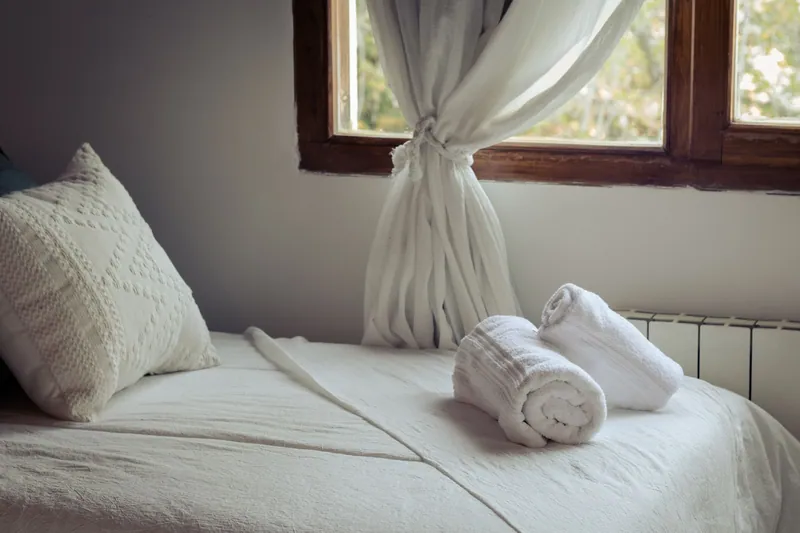
- Fresh towels: one bath towel and one hand towel per person, rolled on the foot of the bed.
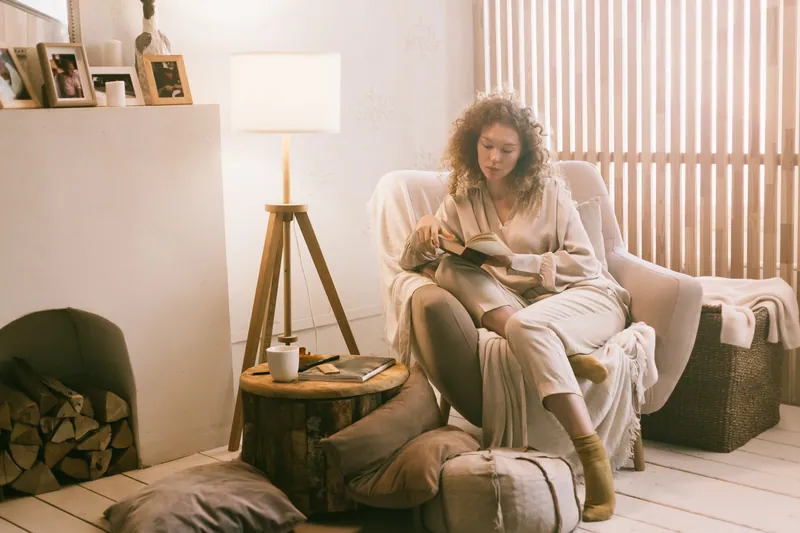
If there’s a comfy chair in the room, add a lamp and a few books and you’ve got a mini cozy reading corner for the quiet hour before the house wakes up.
Your final checklist
Run through this on Sunday night, or the morning they arrive:
- Bed made with fresh sheets, an extra blanket and two pillows per person
- Mattress vacuumed and checked along the seams
- Closet space and one drawer cleared, with spare hangers
- Desk cleared, paperwork put away and the computer logged out
- Bedside lamp in reach and a nightlight on the path to the bathroom
- Curtains or blinds closing fully
- Smoke and CO alarms tested
- Space heater, if any, three feet from anything that can burn
- Rugs and cords out of the walkway
- Baby sleep space bare, furniture anchored and blind cords out of reach
- A high shelf ready for medicines
- Welcome basket, Wi-Fi card and towels in place
Then close the door, light a lamp in the living room and let the room wait for them. You’ve made it ready.