Turn Trick-or-Treating Into a Family Walk (Safely)
Halloween night is already a walk around the neighborhood. A little planning makes it a fun, active outing that keeps everyone visible and safe.
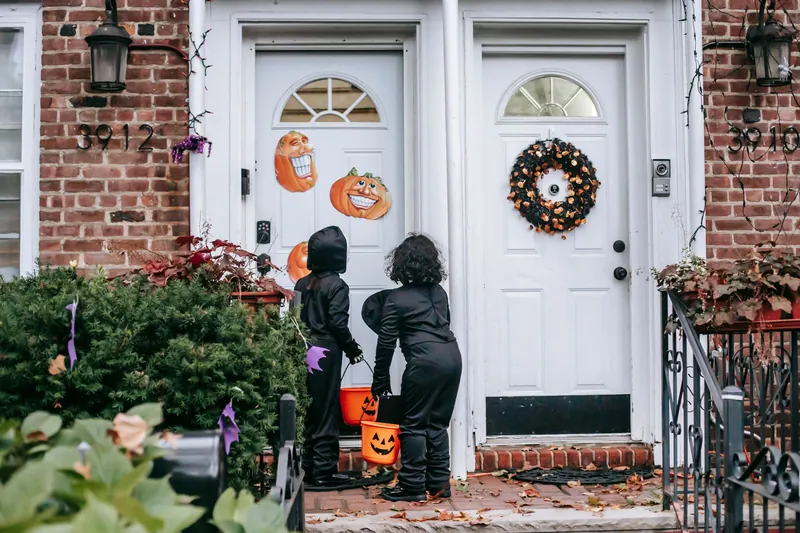
Here’s a fun fact for a holiday built on candy: trick-or-treating is basically a family walk in costume. You go door to door, up and down porch steps, block after block, and most of the time nobody notices they’re exercising. This year, lean into that. No fitness tracker or pep talk needed, just a plan.
Why it counts
The federal Physical Activity Guidelines say kids ages 6 to 17 should get at least 60 minutes of moderate-to-vigorous activity every day, and adults should aim for 150 minutes a week of moderate activity like brisk walking. The current guidelines also dropped the old rule that only 10-minute bouts counted, so any amount of movement adds up. An hour of house-to-house walking with a few hills and a lot of stairs fits right in.
Even researchers who study Halloween’s risks say trick-or-treating “encourages creativity, physical activity, and neighborhood engagement” and shouldn’t be given up. The goal is to do it smart.
Plan a route, not just a direction
- Map a loop before the big night. Choose familiar, well-lit streets with sidewalks. Safe Kids Worldwide suggests direct routes with the fewest street crossings.
- Make the loop the workout. A big loop beats wandering, because you’re always heading somewhere and you end up back home without a tired kid melting down two streets away.
- Build in a turnaround point. Tiny legs (and parents in costume shoes) may run out of steam. Have a shortcut home ready.
- Agree on a time. If older kids are going with friends, review their route and set a time to be home.
Make it a game
- Pick a step goal as a family. If someone has a phone or watch that counts steps, guess the total before you leave and check it at the end. Whoever’s closest picks the first treat from the bag.
- Do porch-step “reps.” Every set of stairs counts. Kids love counting them.
- Go for a “bonus block.” Once the main loop is done, take one extra lap around your own block to see the decorations. It’s a nice cool-down.
- Walk, don’t run, near the road. Save the race for the sidewalk in front of your house.
Be easy to see
- Add reflective tape or stickers to costumes and treat bags, and choose light colors when you can.
- Give everyone a flashlight or glow stick. It helps them see and be seen. Remind kids not to chew or break glow sticks, since the liquid inside is hazardous.
- Choose face paint over masks. Masks can block a child’s view of the road.
- Check costume length and shoes. A costume that fits well and comfortable shoes help prevent trips, which matters when the whole point is a lot of walking.
This is the part that matters most. A study in JAMA Pediatrics found pedestrian deaths were 43% higher on Halloween evenings than on comparison nights, and the risk for children ages 4 to 8 was about ten times higher, peaking around 6 p.m. The absolute risk is still small, but it’s an easy one to cut down.
Street smarts for the whole crew
- Adults go with kids under 12. That’s Safe Kids Worldwide’s recommendation, and it also means you get the walk in too.
- Cross at corners and crosswalks. Look left, right and left again, and keep looking while you cross. The American Academy of Pediatrics notes that mid-block crossings are where child pedestrian injuries are much more common.
- Never cross between parked cars or step out from driveways, and watch for cars turning or backing up.
- No sidewalk? Walk facing traffic, as far to the left as possible.
- Phones down while walking. That goes for grown-ups too, since kids copy us.
- Use the buddy system. NHTSA recommends setting one up before festivities begin so no one walks home alone.
If you’re driving that night
Popular trick-or-treat hours run roughly 5:30 to 9:30 p.m. Slow down in neighborhoods, turn your headlights on early, and back out of driveways extra carefully.
The bottom line
You don’t have to turn Halloween into boot camp. Pick a well-lit loop, make everyone easy to see, and let the stairs and the extra block do the work. You’ll come home with a full bag, tired kids, and a walk you’d have been happy to get any other night.
If anyone in your family has a health condition that affects how far or fast they can walk, check with your doctor about what’s right for them.