Weighted Vest Walking: Is It Worth It, and How to Start Safely
Weighted vests are everywhere. Here's what the research shows about bones, calories and joints, plus a gentle way to try one safely.
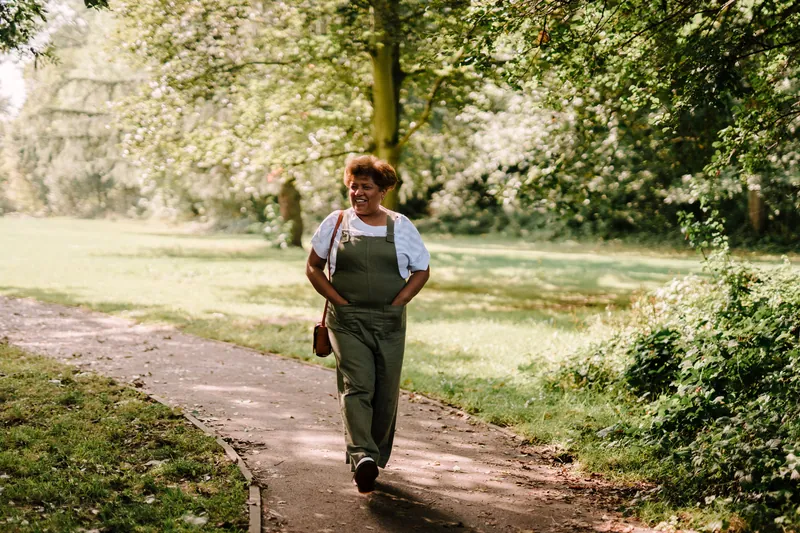
Short answer: a weighted vest can make your regular walk a little harder in a good way, but it isn’t magic, and the bone-health hype is ahead of the science. If you already walk comfortably and want a new challenge, a light vest and a slow ramp-up is a reasonable thing to try. If you’re new to walking, skip the vest for now and just walk.
Here’s what the evidence says, and how to start if you decide to give it a go.
What a weighted vest actually does
A weighted vest spreads extra pounds across your chest, back and shoulders, so your legs, hips and core carry a bit more load with every step. That’s different from ankle or hand weights, which hang off your limbs and can change the way you move.
The vest makes walking more work. That’s the whole point, and it’s also why the details (how heavy, how long, how fast you build up) matter so much.
Does it burn more calories?
A little, and how much depends on the weight.
- In a study commissioned by the American Council on Exercise, untrained women walking at 2.5 mph on flat ground burned about 12% more calories wearing a vest at 15% of body weight, but a 10% vest didn’t make a meaningful difference on the flat. On an incline, the lighter vest did add to the burn. It was a small study of 13 women.
- An older study of 24 young adults walking at 3 mph with vests from 5% to 25% of body weight found that heart rate and oxygen use went up as the load increased, but the authors concluded that considerable loading is needed to meaningfully raise the demand of walking.
- A 2024 study in Medicine & Science in Sports & Exercise, done with mostly young, active military-age adults, modeled how energy use climbs as vest weight goes up, using loads far heavier than you’d want for an everyday walk.
So yes, the vest adds some extra effort. But walking a bit longer, a bit faster or up a hill can add effort too, with no gear at all.
What about bone density?
This is the big claim you’ll see online, and the honest answer is: the evidence is mixed and mostly small.
- One small, encouraging study. Researchers at Oregon State followed postmenopausal women who did weighted vest workouts plus jumping, three times a week (32 weeks a year), for five years. Hip bone density in the exercisers held roughly steady, while the comparison group lost bone. That’s promising, but there were only nine women in each group, the comparison group wasn’t randomly assigned, and the program included jumping, not just walking in a vest.
- One larger, more sobering trial. In a 12-month randomized trial in JAMA Network Open, 150 adults in their 60s with obesity (most of them women) followed a weight-loss diet alone, the diet plus a vest worn about seven hours a day to replace the weight they lost, or the diet plus supervised strength training. Hip bone density fell in all three groups: the vest didn’t prevent the bone loss that came with weight loss, and neither did strength training. The vest was worn through daily life, not on walking workouts.
- What bone experts say. Osteoporosis Canada’s position is that there’s little to no evidence that wearing a vest during walking or daily activities increases bone density, and that many studies on the topic are too small or too short to be sure.
If protecting your bones is your main goal, the better-supported moves are weight-bearing activity like walking itself plus strength training and balance work, which is what the Mayo Clinic recommends for people with osteoporosis. A vest can be one piece of that, not the whole plan.
Posture, joints and your back
Extra weight on your torso means extra load on your spine, hips, knees and feet.
- A small lab study found that walking in a vest at 10% to 20% of body weight increased the forces going through the legs with each step, along with the effort.
- A UCLA Health orthopedic surgeon cautions that anyone with a back or neck injury should be very careful with a vest, and hip, knee or ankle arthritis may feel worse with added weight.
- University of Miami Health notes that a vest that’s too heavy, worn too long or poorly fitted can lead to poor posture over time and strain your back, neck or joints, and that it can raise the risk of falls on stairs or uneven ground.
- Osteoporosis Canada adds that a vest can affect your balance and raise forces on the spine, especially when bending and twisting.
A good gut check from University of Miami Health: if you find yourself leaning forward, slouching or straining, the vest is too heavy for you right now.
How to start gently
Build up slowly
1. Walk first. If you’re not walking regularly yet, build that habit without a vest. UCLA Health suggests several weeks of unweighted walking before adding weight.
2. Start light, around 5% of your body weight. That’s the common starting point UCLA Health recommends, so a vest of no more than about 7.5 pounds for someone who weighs 150. Cleveland Clinic sports medicine specialist Dr. Jessica Tomazic says it’s best to choose a vest that’s 5% to 10% of your body weight. Going heavier doesn’t seem to add much benefit and can raise your injury risk.
3. Keep the first walks short. Try a vest walk that’s less than half as long as your usual walk. If your usual loop is 30 minutes, start with 10 to 15.
4. Change one thing at a time. Once that feels easy, usually after two to four weeks, add a few minutes, a little weight, or a gentle hill. Not all three at once.
Set yourself up
5. Pick flat, familiar routes. Save trails, stairs and hills for later. A vest can throw off your balance until you’re used to it.
6. Get the fit right. Look for an adjustable vest that sits snug and doesn’t bounce or shift, with the weight spread evenly front and back. A vest that’s too tight around your chest can make breathing harder.
7. Wear it for the walk, not all day. Use it during your workout, then take it off. University of Miami Health advises wearing one only during intentional activity sessions.
Know when to ease off
8. Skip the running. Walking is the safest place to start. Hold off on running or jumping in a vest unless a physical therapist or sports medicine doctor has worked with you on it, University of Miami Health advises. Cleveland Clinic also cautions against biking and other fast or balance-heavy activities in one.
9. Listen to your body. Stop if you feel pain (not just tired muscles), notice you’re limping or changing how you walk, or feel soreness that doesn’t fade within a day or two.
Talk to your doctor first if…
Check with your doctor or a physical therapist before you try a weighted vest if you:
- Are pregnant or recently postpartum. Pregnancy loosens ligaments and shifts your balance, and ACOG advises against activities that may result in a fall, and University of Miami Health says pregnant people shouldn’t wear weighted vests.
- Have back, neck, hip, knee or ankle problems, including arthritis or a past injury.
- Have osteoporosis or low bone density, or have had a fracture. Mayo Clinic recommends talking with your provider about which exercises are safe for you.
- Have a heart or lung condition, high blood pressure, or get short of breath, dizzy or have chest pain with exercise. Extra load means extra work for your heart.
- Have balance problems or have fallen recently.
The American Council on Exercise says weighted vests aren’t recommended for people with arthritis, severe osteoporosis or COPD, and University of Miami Health lists balance or gait problems and severe osteoporosis as reasons to skip one.
So, is it worth it?
It can be, as a way to make a walk you already enjoy a little more challenging. It’s a reasonable tool, not a requirement, and not a shortcut to stronger bones. If you’re curious, start light, start short and build slowly. And if a vest just isn’t for you, a longer walk, a brisker pace or a couple of strength sessions a week will get you to a lot of the same places.