Holiday Medicine Cabinet Check: A 20-Minute Safety Reset
Clear out expired medicines safely, store what's left up and away, handle guests' pill bags and dose kids' medicine right before company arrives.
We independently pick everything we recommend. When you buy through our links, Heart Habits may earn a commission. Learn more
Here’s the short version: pull everything out of the medicine cabinet, check the dates and get rid of what’s expired the safe way. Put what’s left somewhere up high and out of sight, and ask guests to do the same with purses and bags that hold medicine. Measure kids’ medicine with the tool that came with it, and save Poison Help, 1-800-222-1222, in your phone before anyone arrives.
It’s worth 20 minutes this week. The CDC says about 100 young children are brought to the emergency room every day because they got into medicines left within reach. Holidays add guests, bags, new routines and a lot of distraction.
As an Amazon Associate I earn from qualifying purchases.
Start with the expiration dates
Take everything out, including vitamins, gummies and the bottles in your nightstand. The date is printed on the label or stamped on the bottle or carton, sometimes after “EXP”. The FDA says expired medicines can be less effective or risky, and some are at risk of bacterial growth. If it’s past its date, don’t use it.
While you’re at it, rethink where you keep medicines. A damp bathroom cabinet can make medicines less effective even before they expire. For most medicines, the FDA suggests a cool, dry place such as a dresser drawer, storage box, closet shelf or kitchen cabinet away from hot appliances and the sink. Always check the label, because some medicines need the fridge and others can’t take heat.
How to get rid of old medicines safely
Take-back is the first choice. The FDA says a take-back option is the best way to dispose of most unused or expired medicines, prescription or over-the-counter.
Some pharmacies have drop-off boxes or kiosks, and some offer mail-back envelopes, sometimes at no cost. You can find a year-round drop-off site through the FDA’s take-back page, which links the DEA’s search, or by searching “drug disposal near me” in a map app. The DEA also holds a National Take Back Day each spring and fall, and the October 2026 event had more than 4,200 collection sites.
Flush only what’s on the FDA flush list. A short list of medicines, mostly strong opioid medicines, can cause death from one dose if the wrong person takes them, so if you can’t get to a take-back option soon, the FDA says to flush those. That includes medicines with “fentanyl,” “oxycodone,” “hydrocodone,” “morphine” or “buprenorphine” in the name. Don’t flush anything that isn’t on the list.
Everything else can go in the trash, done right. If there’s no take-back option, almost all other medicines can go in household trash. Mix pills or liquid with used coffee grounds, dirt or cat litter, seal the mixture in a zip-top bag or can and throw it away, and scratch out your personal information on the empty bottle. Inhalers are different: they can be dangerous if punctured or burned, so read the label and ask your trash and recycling service.
Store it up, away and out of sight
Pick one spot too high for young children to reach or see, and put medicines back there after every dose. The CDC says never to leave them on a kitchen counter or at a sick child’s bedside, even if the next dose is a few hours away. Gummy vitamins and supplements belong there too, since many look like candy.
A lockable box adds a second layer, since the AAP says to store medicines out of sight and reach, preferably in a locked cabinet or container, especially for anything on the flush list.
A Vaultz locking medicine case with a combination lock is one option. Keep it up and away anyway, and don’t rely on the lock alone.
Child-resistant isn’t childproof
Safety caps help, but the CDC is clear that children may still be able to open them. Every time you close a bottle, twist the cap until it clicks or won’t turn anymore. Then put it away anyway. Kids can get into something harmful in less than a minute.
Guests bring medicines, too
This is the one most of us miss. Grandparents and other visitors often carry pills in purses, coat pockets, backpacks and weekly pill organizers. The CDC suggests asking guests to keep purses, coats, backpacks and other bags that have medicine in them up and away and out of sight while they’re in your home.
Make it easy by naming a spot, like a high closet shelf or a bedroom with the door closed, and offering it when you take their coats. If a guest’s medicine needs to stay cold, ask what the label says and give it a spot in the fridge that little hands can’t reach. If you’re the guest, it’s perfectly polite to ask your host where to put your medicines.
Two poison risks that aren’t in the medicine cabinet
Button batteries. These coin-shaped batteries power hearing aids, watches, remote controls, singing greeting cards and flashing jewelry. Poison Control says the nickel-sized 20 mm, 3-volt lithium coin cells are the most hazardous, and a swallowed battery can burn through a child’s esophagus in just 2 hours. If you think a child swallowed one, don’t wait for symptoms: go to the emergency room right away, call the National Battery Ingestion Hotline at 1-800-498-8666 or Poison Help at 1-800-222-1222 on the way, and don’t make them vomit or give food or drink until an X-ray shows the battery is beyond the esophagus.
Keep spare and used batteries locked up, and check that battery covers on new toys and cards are secured.
Liquid nicotine. E-liquids for vapes can cause seizures, coma, stopped breathing and death in young children, and in one year of reports, about 88% of exposures were in children under 5. Ask guests who vape to keep devices, refills and the bags that hold them up high and out of view. If it spills on skin, wash it off with soap and water, and if anyone drinks it, call Poison Help right away.
Dosing kids’ medicine right
Use the tool that comes with it. The AAP says to use the dropper, syringe, cup or dosing spoon that comes with the medicine, and never a kitchen spoon or a cup from another bottle.
If a tool didn’t come with it, ask your pharmacist for one. An oral syringe is usually the most accurate, especially for doses under 5 mL. If the syringe has a cap, throw the cap away before you use it, because it could choke your child.
A 10 mL Ezy Dose oral syringe is marked in milliliters and uses a built-in dose dial rather than a small loose cap.
Go by weight first. If you know your child’s weight, the AAP says to use that first to find the dose, and go by age only if you don’t. Watch the decimal point, because “0.5 mL” is not the same as “5 mL”. Infant and children’s versions of the same medicine may come in different strengths, and the infant medicine may be stronger than the children’s medicine, so read the label every time.
Keep adult medicine for adults. The FDA says not to give children medicines packaged and made for adults. It also warns that giving two products with the same drug can lead to an accidental overdose, which is easy to do when two adults are helping.
Skip cough and cold medicine for little ones. The FDA says children under 2 shouldn’t get any cough and cold product with a decongestant or antihistamine, because of serious side effects, including convulsions. Makers label these products “do not use in children under 4 years of age”, and the AAP says they’re not recommended under 4 unless your child’s doctor advises it, and not to be used under 2. When in doubt, call your pediatrician or pharmacist.
A simple holiday kit
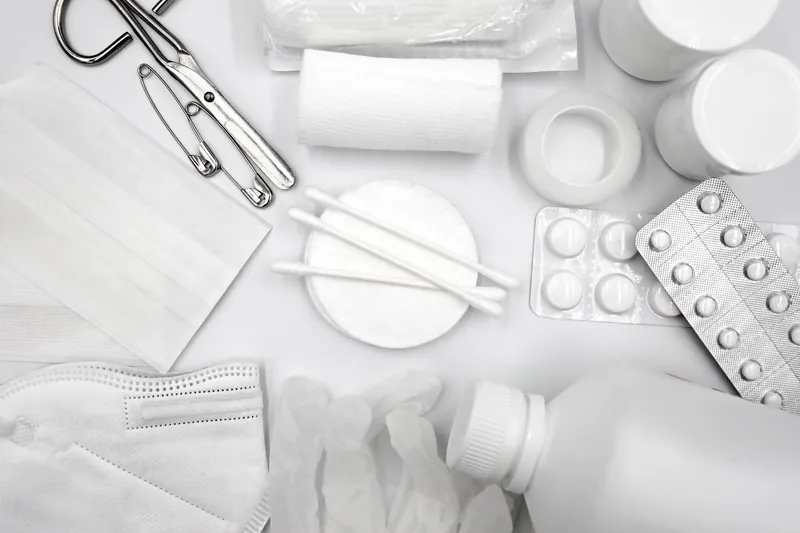
You don’t need much. Keep these together, up and away:
- Basic first aid supplies, like adhesive bandages, antibiotic ointment and elastic bandages.
- Your child’s fever and pain reliever, in the right strength for their age and weight, with its own dosing tool kept with the bottle.
- Any prescriptions your family takes, checked for dates and refills before pharmacies switch to holiday hours.
- Poison Help, 1-800-222-1222, saved in your phone and shared with sitters and grandparents.
Set a reminder to check it every 6 months, as the AAP suggests for family emergency kits.
A BAND-AID Brand 160-piece first aid kit includes adhesive bandages and antibiotic cream, along with other basic supplies.
If something goes wrong
Call Poison Help at 1-800-222-1222 right away if you think your child got into a medicine, vitamin or supplement, even if you’re not sure. It’s free, expert and confidential. If the person collapses, has a seizure, has trouble breathing or can’t be woken up, call 911 now.
The bottom line
Check the dates, take expired medicines to a take-back site and flush only what’s on the FDA list. Store everything up, away and out of sight, caps clicked shut, and give guests a high spot for their bags. Dose kids’ medicine by weight with its own tool, and keep cough and cold products away from little ones.
Save 1-800-222-1222 now, and call 911 for collapse, seizure, trouble breathing or the person you can’t wake.
More from Hearthabits: