Winter Eczema in Kids: Gentle Daily Care for Dry, Itchy Skin
Why eczema flares when it gets cold, a simple bath-and-moisturize routine that helps, what to know about food, and when to call the pediatrician.
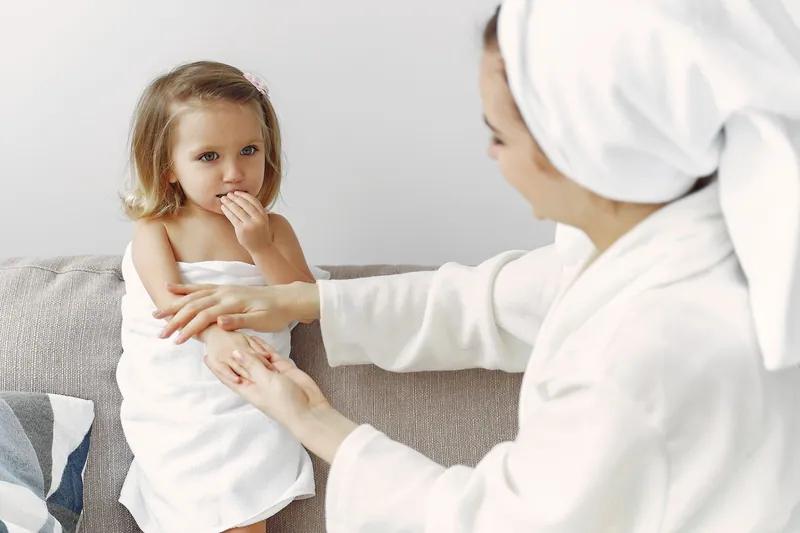
Here’s the short answer: winter eczema usually settles down with a simple, steady routine. That means short, lukewarm baths and a thick, fragrance-free moisturizer right after. Add soft cotton layers, a home that’s not too hot or too dry, and a call to the pediatrician if the skin looks infected or the itch is stealing sleep.
You’re far from alone in this. In a 2024 national survey, the CDC found that just over 1 in 10 children ages 0–17 (12.7%) had diagnosed eczema. The good news is that most of what helps happens at home.
Why eczema flares when it gets cold
Eczema, also called atopic dermatitis, is a long-term skin condition that tends to come and go in flares, and it isn’t contagious. Much of the trouble starts with the skin barrier. The American Academy of Pediatrics (AAP) explains that many kids with eczema don’t have enough of a protein called filaggrin, so their skin has a harder time holding in water and keeping irritants out.
Then winter piles on. The American Academy of Dermatology (AAD) says dry air, cold temperatures and indoor heating can irritate your child’s skin, causing eczema to flare. Hot water and overheating can make things worse, too.
The daily routine that does most of the work
Keep baths short and lukewarm. Pediatricians suggest bathing every day or every other day for 5 to 10 minutes in lukewarm water, with a fragrance-free cleanser and no bubble bath. Use a mild cleanser only when needed, and pat the skin partly dry instead of rubbing. Your pediatrician can tell you how often to bathe your child.
Moisturize right away. If your child has a prescribed medicine, the AAP says it goes on the rash before the moisturizer. Then smooth moisturizer over the whole body while the skin is still damp, which helps “lock in” the water. The AAD’s tip is to do it within 3 minutes of bathing.
Choose thick and fragrance-free. The AAP recommends moisturizers that are fragrance free and thick in texture, and an ointment if a cream stings. Lotions are thinner and less effective, and the AAP says the most important thing is finding a moisturizer your child likes to use. In winter, dermatologists suggest moisturizing after every bath, shower and hand washing, and before bed.
Dress in soft cotton layers. The AAD recommends 100% cotton, since wool and synthetic fibers like acrylic and polyester can irritate the skin. Loose layers make it easy to peel one off before your child overheats. Outside, cotton mittens or a cotton glove liner can help, and it’s smart to swap wet clothes and shoes as soon as you’re in the door.
Wash gently. The AAP suggests mild, fragrance-free laundry detergent and no fabric softeners or dryer sheets. A few more easy habits help, too: use the recommended amount of detergent, rinse well, choose tagless clothes and wash new clothes before wearing.
Mind the heat and the nails. Keep little ones away from radiators, heating vents and fireplaces, and aim for a cool, stable temperature and consistent humidity at home. Short nails and cotton gloves at night can limit the damage from sleepy scratching.
If you run a humidifier, keep it clean
The AAD suggests using a humidifier if the air feels dry. Just know that a neglected tank can grow germs, and some humidifiers can send them into the air. The EPA’s care tips for portable humidifiers are simple:
- Empty the tank, wipe it dry and refill it daily to reduce the growth of microorganisms.
- Use water with low mineral content, such as distilled water.
- Clean it every third day, and rinse well after any cleaning product.
- Don’t humidify past 50 percent relative humidity, because extra moisture can encourage dust mites and mold.
- Keep steam units out of children’s reach, since steam and hot water can burn.
If a stuffy-nosed little one is sharing that humidifier this season, our guide to colds, flu and RSV covers when to keep kids home.
How to spot your child’s triggers
Triggers vary from child to child. The AAP’s list includes dust mites, fragrances, heat and sweat, pet dander, pollen, tobacco smoke, and wool and synthetic fabrics. If your child’s eczema flares during the winter, dry air is a likely culprit.
Think like a gentle detective. Dermatologists suggest noticing what your child was doing before a flare: a stressful school week, skipped skin care on a busy night or getting overheated. A few quick notes on your phone can reveal a pattern over a couple of weeks.
Keep expectations kind, too. The AAD is clear that you can’t cure eczema by only removing triggers, and the AAP says eczema may still flare despite your best efforts. A flare doesn’t mean you did something wrong.
What about food?
It’s natural to wonder whether something your child eats is behind the rash. The AAP’s 2025 guidance says up to 40% of patients with eczema also develop food allergies, but foods typically do not cause atopic dermatitis. And even when a child does have a food allergy, the AAD says removing those foods rarely stops the eczema.
Cutting foods on your own can backfire. The AAP calls elimination diets based on that belief unnecessary and potentially dangerous, and the AAD warns that removing many foods can lead to weight loss, poor growth and malnutrition. Testing is tricky, too: kids with eczema can get positive allergy tests even though they may not actually have a food allergy.
That doesn’t mean food never matters. The National Institute of Allergy and Infectious Diseases calls eczema the strongest risk factor for developing food allergy, and the AAP says that in rare cases, certain foods can flare an eczema rash. If you suspect a food, jot down what your child ate and when the flare showed up, then talk with your pediatrician before changing their diet. A severe reaction after eating needs immediate medical care.
Medicine is your doctor’s call
Many kids need more than moisturizer during a flare. The AAP says prescription topical steroids are very effective and safe when used appropriately, and your doctor will help you find the right strength and form. If you’re nervous about them, say so at the visit rather than stopping them on your own.
The National Institutes of Health’s skin institute says it’s important to use skin treatments as directed and follow up with your doctor to make sure the plan is working. The same page says bleach baths and wet wraps should only be tried after talking with your doctor. The nonprofit National Eczema Association adds that for homemade bath additives, there’s often little if any scientific evidence.
When to call the pediatrician
The AAP says to talk to your child’s doctor if you see yellow or honey-colored crusting and scabbing, weepy or oozy skin, blisters or pus bumps. Call, too, if the rash is not getting better even with the usual treatments. And if itching keeps your child from restful sleep, the NIH says to talk to your doctor about options.
Get care right away for eczema herpeticum. It’s a rare infection that can be life threatening, caused by the cold sore virus. Warning signs include a rash of itchy, watery blisters that may spread quickly and hurt, along with fever, tiredness or swollen lymph nodes. Anyone who might have it needs immediate medical care.
To lower the risk, keep your child away from skin-to-skin contact with anyone who has a cold sore. Don’t share forks, cups or lip balm, and wash hands often.
The bottom line
Food is rarely the cause, and medicine is a plan you make with your pediatrician. Call about oozing, crusting, poor sleep or a rash that won’t improve, and get care right away for spreading, painful blisters with fever.
If itchy nights have knocked everyone’s sleep off track, our gentle reset for sleep and mood is a cozy place to start.