Strength Training in Your 40s and 50s Is Supposed to Be Boring
Steady, unglamorous lifting protects muscle and bone in midlife. Here's what the guidelines actually say, plus a simple way to start.
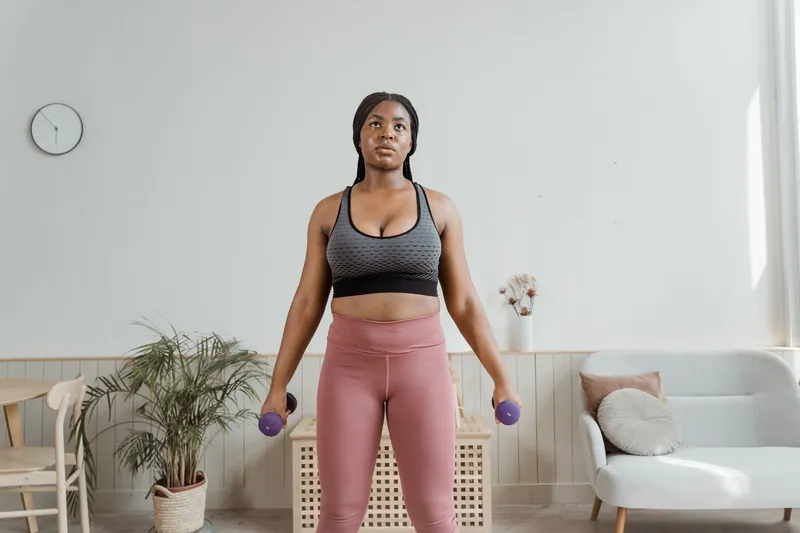
Short answer: the strength training that helps most in your 40s and 50s is usually quiet, repetitive and a little dull. That’s a feature, not a bug. Two short sessions a week that work your major muscle groups, with a weight that feels challenging by the last few reps, is what the federal guidelines ask for. You don’t need a viral workout, a personal-record chase or a gym that smells like ambition.
Here’s what the evidence supports, and how to build a boring routine that sticks.
Why midlife is a good time for boring lifting
Muscle and bone change with age. Mayo Clinic notes that lean muscle mass and strength tend to decline with age, and that strength training can help you keep and increase muscle mass and may help protect against age-related loss of bone strength. The National Institute of Arthritis and Musculoskeletal and Skin Diseases (NIAMS) says resistance training puts stress on bones, so it can make them stronger, and that adults should do muscle-strengthening activity of at least moderate intensity at least twice a week.
For women in the menopause transition, the picture is similar but sharper. A 2023 systematic review and meta-analysis of 27 randomized trials in menopausal women (nearly 2,000 participants) found that exercise improved lean body mass and muscle strength. The effect of resistance training on lean body mass was small, but the authors concluded that resistance training about three times a week for at least six weeks worked best. That’s a pooled look at many trials, not one small study, but the programs varied, so it doesn’t pick one “perfect” routine.
Men lose muscle with age too; Mayo’s point that muscle mass and strength decline with age applies to everyone. The point for everyone in midlife is the same: walking and other cardio matter, and so does asking your muscles to push or pull against something on purpose.
What the guidelines actually ask for
The Physical Activity Guidelines for Americans, from the U.S. Department of Health and Human Services’ Office of Disease Prevention and Health Promotion (ODPHP), say adults should do muscle-strengthening activities of moderate or greater intensity that involve all major muscle groups on 2 or more days a week. The Centers for Disease Control and Prevention (CDC) puts it in plain language: work your legs, hips, back, chest, abdomen, shoulders and arms, and aim for about 8 to 12 repetitions per exercise, to the point where another rep would be hard without help. One set counts; two or three sets can add more benefit.
The American Heart Association also recommends strength training at least twice a week, with one set of 8 to 12 repetitions working a muscle group to fatigue usually enough for each muscle group.
You still want aerobic activity too — at least 150 minutes a week of moderate effort, like brisk walking. If you already walk, keep that. If you’re curious about making a walk a little harder later, we covered weighted-vest walking separately; strength work and walking pair well, and neither replaces the other.
Boring is the point (progressive overload, gently)
“Progressive overload” is the unsexy name for a simple idea: when a workout gets easy, make it a little harder. Mayo Clinic’s guidance is to choose a weight or resistance that tires your muscles after about 12 to 15 repetitions, then gradually increase the weight or resistance when you can do more reps easily. Rest one full day between sessions for the same muscle group.
A 2026 American College of Sports Medicine (ACSM) position stand, summarizing evidence from many systematic reviews, landed on a similar message for healthy adults: the biggest leap is going from no resistance training to any resistance training (the full stand is in Medicine & Science in Sports & Exercise). Training major muscle groups at least twice a week matters more than a complicated plan. That is an organization position stand based on an overview of reviews, not a single trial, and it is aimed at healthy adults — not a prescription for every medical situation.
So yes: same moves, same days, slightly harder over months. Boring on purpose.
A simple twice-a-week starter plan
You can do this at home with body weight, bands or dumbbells, or at a gym on machines. Mayo Clinic lists body-weight moves, resistance tubing, free weights and machines as solid options. Pick one tool and stick with it for a few weeks.
Warm up and set the rules
- Warm up first. Take 5 to 10 minutes of brisk walking or easy marching in place. Mayo Clinic advises not skipping this; cold muscles are more prone to injury than warm ones.
- Aim for two nonconsecutive days. Monday and Thursday, or Tuesday and Friday — whatever you’ll actually do. Leave a rest day between sessions for the same muscles.
- One hard set is enough to start. For each move, do 8 to 12 controlled reps. The last two should feel challenging while your form still looks good. If you breeze through 15, the load is too light.
Cover the big muscle groups
- Legs and hips. Sit-to-stand from a chair, body-weight squats to a depth you control, or a leg press if you’re on machines.
- Push. Wall or counter push-ups, a chest-press machine, or dumbbell floor press.
- Pull. A resistance-band row, a seated cable row, or a dumbbell row with a hand on a bench or chair for support.
- Core and carry. A forearm or tall plank for 20 to 40 seconds, plus a short farmer carry (walk while holding weights or grocery bags at your sides).
Progress without drama
- Change one thing at a time. When a set feels easy for two sessions in a row, add a little weight, add a second set, or add a few reps — not all three.
- Move slowly. Lift and lower with control. Mayo Clinic’s technique page says to move the weight in a controlled way, because going slowly keeps you from relying on momentum to lift it.
- Stop for pain, not effort. Muscle burn and heavy breathing are normal near the end of a set. Sharp joint pain, or pain that makes you change your form, means stop that move and lighten up or swap it.
20 to 30 minutes, twice a week, is a real program. Family walks and neighborhood loops still count for your aerobic minutes — even a holiday stroll like turning trick-or-treating into a family walk adds up — but they don’t replace these two strength days.
Talk to your doctor or a physical therapist first
Check in with your doctor or a physical therapist before you start or step up strength training if you:
- Have heart disease, high blood pressure you manage with medication, or a past heart attack or stroke. The American Heart Association notes that activity can help after a cardiac event, and that you should talk with your health care team first so the plan is safe for you.
- Get chest pain, pressure, unusual shortness of breath, dizziness or faintness with exertion. CDC lists chest pain and related symptoms among signs of a possible heart attack — stop and get medical help rather than pushing through.
- Have osteoporosis, a recent fracture, spine problems, or significant joint pain (hips, knees, shoulders, back). NIAMS recommends talking with a health care provider so you can choose activities that are safe for your bones.
- Are pregnant, recently postpartum, recovering from surgery, or living with a condition that affects balance, vision or healing.
- Are new to exercise and unsure where to start — a session with a physical therapist or qualified trainer to learn form is time well spent.
Stop a workout and seek care if you develop chest pain or pressure, pain in the jaw, neck, back or arm, shortness of breath, or feel light-headed or faint. Those are not “push through it” symptoms.
The bottom line
Strength training in your 40s and 50s is supposed to look ordinary: the same few moves, twice a week, a little harder over time. Federal guidelines, CDC how-to pages, Mayo Clinic and ACSM all land in the same neighborhood — consistency over spectacle. Start light, cover your major muscle groups, rest between sessions, and get personal medical advice when your history calls for it. Boring, on purpose, for years.