10 Thankful Picture Books for Kids to Read Together This Thanksgiving
Ten gratitude and Thanksgiving picture books for ages 3 to 10, from Bear Says Thanks to Keepunumuk, plus easy ways to talk about thanks.
We independently pick everything we recommend. When you buy through our links, Heart Habits may earn a commission. Learn more
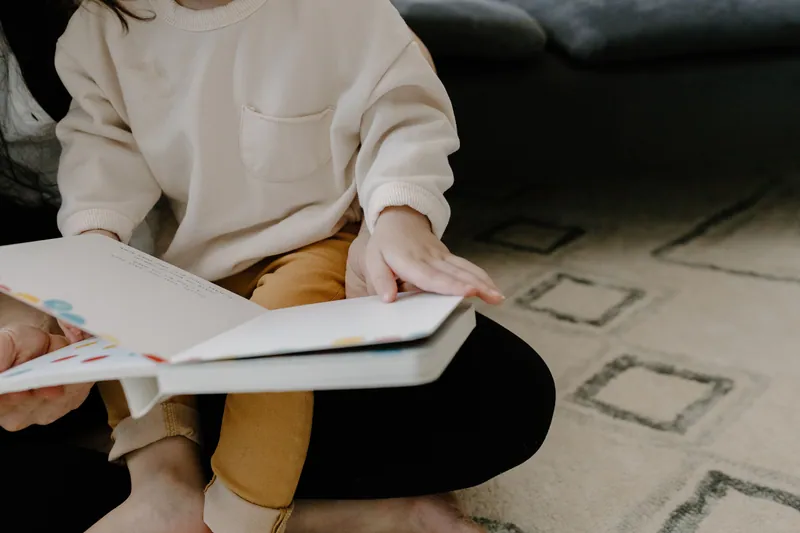
Here’s an easy Thanksgiving tradition that takes ten minutes: pull a child onto your lap this week and read a book about saying thanks. The ten picture books below are about gratitude, sharing a meal and the people who make a holiday feel like home, and every one works as a read-aloud.
I’ve sorted them by who they suit best: the littlest listeners, books about sharing food and family, books about the Thanksgiving story and the seasons, and one for older kids. Age ranges come from the publisher or a major review, and you’ll find some easy ways to talk about thanks at the end.
As an Amazon Associate I earn from qualifying purchases.
How I picked these
Every book here is in print or easy to find at a library, and each one gets at gratitude in a way kids can feel, not just hear. Age ranges are a guide, not a rule. A good picture book often works for a big sibling too.
If Thanksgiving is this week, check your library’s holds first. Popular holiday titles go fast, but many libraries have ebook copies too.
For the littlest listeners
The Thankful Book by Todd Parr (2012)
Ages 4 to 6 · 32 pages
In bright, bold pictures, a parade of kids and animals give thanks for music, their feet, bath time, kisses and big family meals. Little, Brown lists the hardcover at 32 pages for ages 4 to 6, and there’s a board book edition for younger hands.
It’s short and very simple, which is the point: every page is an invitation to say what you’re thankful for. Kids over 6 may find it a little young, so it’s best for the 4-to-6 crowd.
Bear Says Thanks by Karma Wilson, illustrated by Jane Chapman (2012)
Ages 4 to 8 · 40 pages
Bear wants to throw a feast for his friends, but his cupboards are bare. One by one, his woodland friends show up with food to share, and Bear has to work out what he can give back. Simon & Schuster lists it at 40 pages for ages 4 to 8.
The rhyming text reads aloud smoothly, and the repeated line “and the bear says thanks” is made for little voices to join in. It only nods at Thanksgiving, so it works just as well any time of year. It’s part of the Bear series, but you don’t need the others first.
Last Stop on Market Street by Matt de la Peña, illustrated by Christian Robinson (2015)
Ages 3 to 5 · 32 pages
CJ isn’t happy about riding the bus across town with his nana on a rainy Sunday, when his friends have cars. Nana keeps showing him the music, color and kindness around them, all the way to the last stop. Putnam lists it at 32 pages for ages 3 to 5, and it won the Newbery Medal and a Caldecott Honor.
It isn’t a Thanksgiving book, but it’s one of the loveliest books I know about noticing what you have. It gently touches on poverty and disability, so expect a few good questions.
Sharing food and family
Thank You, Omu! by Oge Mora (2018)
Ages 4 to 8 · 40 pages
Omu’s stew smells so good that the whole neighborhood follows the scent to her door, and she shares a bowl with each of them until the pot is empty. Then the neighbors show up with something for her. Little, Brown lists it at 40 pages for ages 4 to 8. It’s a Caldecott Honor book, and the author’s note explains that “Omu” means “queen” in Igbo.
The cut-paper art is gorgeous. Very little kids may worry when the pot runs dry, so keep reading, because the ending makes up for it. A Spanish edition, ¡Gracias, Omu!, is also available.
Fry Bread: A Native American Family Story by Kevin Noble Maillard, illustrated by Juana Martinez-Neal (2019)
Ages 3 to 6 · 48 pages
In short verses, a family makes fry bread together, and each spread shows a different side of it: fry bread is food, time, history, nation, us. Roaring Brook lists it at 48 pages, and it won the Robert F. Sibert Informational Book Medal. The illustrator’s site lists it for ages 3 to 6.
The main text is short enough for a toddler, while the author’s note at the back is meatier and better for grown-ups and older kids. There’s a recipe too, but frying is a job for the adults.
Fry Bread: A Native American Family Story
Gracias / Thanks by Pat Mora, illustrated by John Parra (2009)
Ages 5 to 9 · 32 pages
From the sun that wakes him up to the ladybug that lands on his finger, a young boy gives thanks for the small, funny moments of one day, including the little brother who throws mashed peas. Each line is in Spanish first, then English. Lee & Low lists it at 32 pages for ages 5 to 9, and Parra’s art won a Pura Belpré Illustrator Honor.
It’s my favorite book here for showing kids that gratitude can be silly and specific. If you don’t read Spanish, just read the English lines, or let a Spanish-speaking family member take a turn.
The Thanksgiving story and the seasons
Keepunumuk: Weeâchumun’s Thanksgiving Story by Danielle Greendeer, Anthony Perry and Alexis Bunten, illustrated by Garry Meeches Sr. (2022)
Ages 3 to 7 · 32 pages
A Wampanoag grandmother tells her grandchildren the story her people call Keepunumuk, “the time of harvest.” Corn and her sister plants decide to send the First Peoples to help the struggling newcomers learn to grow corn, beans and squash. Charlesbridge lists it at 32 pages for ages 3 to 7, with a glossary, a recipe and back matter, and it’s written and illustrated by four Indigenous creators.
The back matter explains that many Wampanoag people remember the day as a day of mourning, so be ready for honest questions. The story within a story takes a moment to follow, but the changing typefaces help.
Keepunumuk: Weeâchumun’s Thanksgiving Story
We Are Grateful: Otsaliheliga by Traci Sorell, illustrated by Frané Lessac (2018)
Ages 3 to 7 · 32 pages
Otsaliheliga is the word members of the Cherokee Nation use to express gratitude. This book follows a modern Cherokee community through a full year, from fall to summer, with a glossary and the Cherokee syllabary at the back. Charlesbridge lists it at 32 pages for ages 3 to 7, and it was a Sibert Honor book.
It covers a whole year rather than just Thanksgiving, and it reads more like a gentle tour than a story. It’s a lovely one to bring back out in spring.
Balloons over Broadway by Melissa Sweet (2011)
Ages 4 to 8 · 40 pages
Before the giant balloons, there was Tony Sarg, a puppeteer who loved to make things move. This picture-book biography shows how he came to design the “upside-down puppets” for Macy’s Thanksgiving Day Parade. Kirkus lists it at 40 pages for ages 4 to 8, and it won the 2012 Sibert Medal.
It’s the perfect pick for the night before Thanksgiving if your family watches the parade. The collage pages are busy and full of detail, so it’s better in your lap than read to a crowd.
For older kids
Thanku: Poems of Gratitude edited by Miranda Paul, illustrated by Marlena Myles (2019)
Ages 6 to 10 · 40 pages
More than 30 poems give thanks for a puppy, hot cocoa, the sky and much more, each in a different form, from a sonnet to a sijo. Kirkus lists it at 40 pages for ages 6 to 10, and the back matter explains every poetic form.
Kirkus found the individual poems stronger than the collection as a whole, so read two or three a night instead of front to back. It’s a great way to give a 9-year-old who feels “too old” for picture books something to read.
How to read together and talk about thanks
Let them join in. Repeated lines like Bear’s “and the bear says thanks” are built for kids to say with you. Pause and let them finish the line.
Make your own page. After The Thankful Book or Gracias / Thanks, fold a sheet of paper and have everyone draw one thing they’re thankful for. Keep it specific and a little silly, the way Pat Mora does.
Ask, don’t lecture. Try “Who would you share your stew with?” after Thank You, Omu! or “What did Nana notice that CJ didn’t?” after Last Stop on Market Street. A shrug is a fine answer.
Bring it to the table. Maren’s simple gratitude practice for the holidays has an easy habit: name one good thing at dinner. A book read before the meal gives kids something to say.
Give history room. If you read Keepunumuk or We Are Grateful, use the back matter. It’s fine to say “I’m learning this too.”
Keep it cozy, not compulsory. If a child would rather just look at the pictures, let them. Maren’s cozy reading corner guide is great if you want a spot just for story time.
Driving to Grandma’s? My Thanksgiving road-trip audiobooks guide has family picks sorted by drive length.